
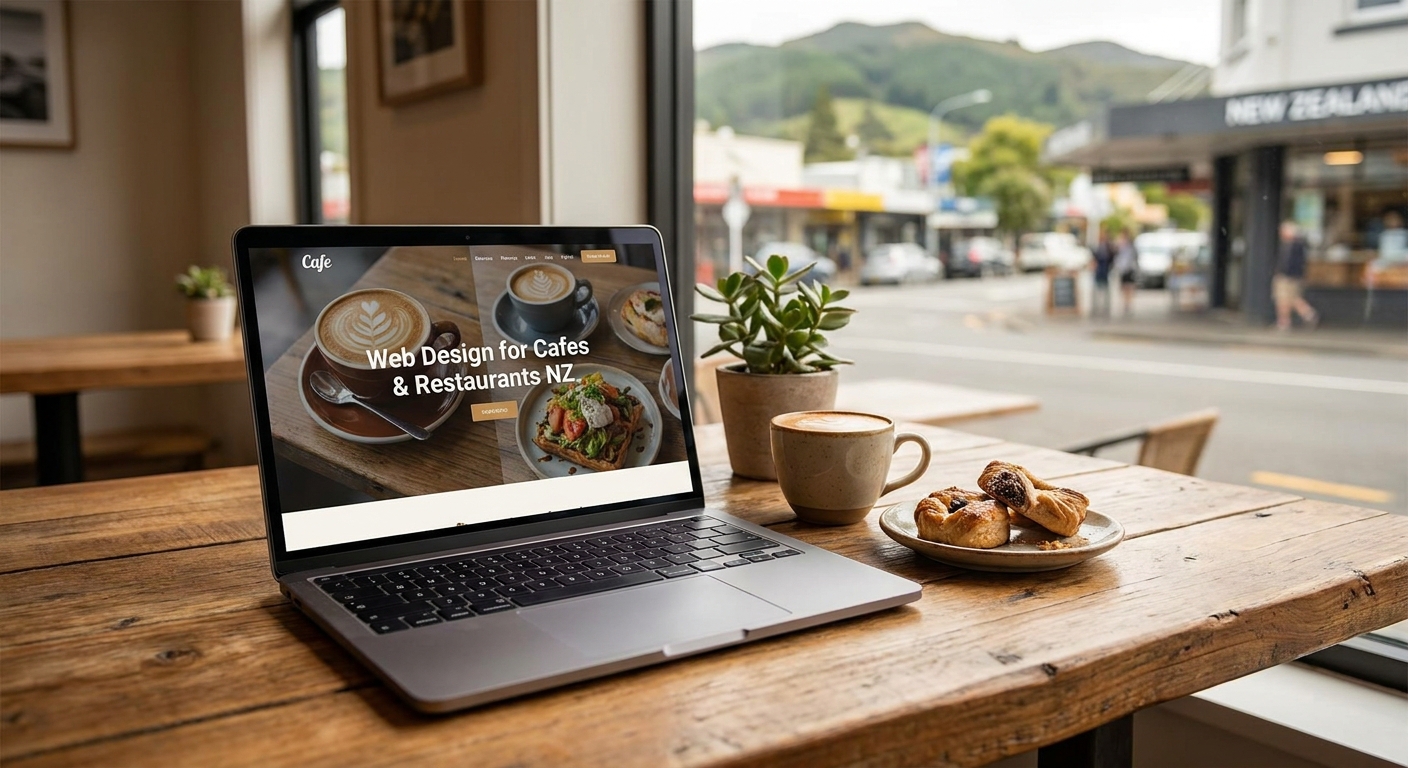
If you run a cafe or restaurant anywhere from Ponsonby to Christchurch, your website is doing more selling than your specials board ever will. No Brainer's web design for cafes and restaurants needs to load fast, show the food properly, and get bookings sorted without anyone hunting for a phone number.
- Custom-built sites win for cafes and restaurants taking bookings in 2026 - buy that route.
- DIY builders are fine for pop-ups, but skip them once you're doing daily covers.
- A Facebook page alone is not web design for cafes and restaurants - it's a dead end for hungry googlers.
- Load time under 3 seconds and a menu within two taps are non-negotiable in 2026.
Why this matters
Diners decide where to eat before they walk in the door, and that decision usually happens on a phone, standing outside three other options. If your site takes 6 seconds to load or buries the menu behind a PDF, that customer is already at the place next door with a faster site.
Web design for cafes and restaurants in NZ isn't about looking flashy - it's about answering three questions in under 10 seconds: what do you serve, where are you, and can I book a table right now. Get those three right in 2026 and the rest is polish.
Who this is for
This guide is for cafe and restaurant owners in NZ who are either building their first proper site or replacing one that's quietly costing them covers. Whether you're a single-location brunch spot in Wellington or a small group with two or three sites, the criteria below apply the same way.
What to look for in web design for cafes and restaurants
Speed on mobile, not just desktop
Most of your traffic in 2026 comes from someone standing outside your door on 4G, not sitting at a desktop with fibre. A site that loads in under 3 seconds on mobile keeps that person reading; anything slower and they bail to Google Maps for the next option.
Real photos, not stock food shots
Stock imagery of generic avocado toast tells a diner nothing about your actual plating, portion size, or vibe. Sites built around real photography of your actual dishes and dining room convert better because people can picture themselves sitting there.
Booking or ordering built in, not bolted on
A "Contact us" page with a phone number is not a booking system in 2026 - diners expect to reserve a table or place an order in a couple of taps. Integration with a booking widget or ordering platform should sit on your homepage, not three clicks deep.
Local SEO tied to Google Business Profile
Your website and your Google Business Profile need to say the same thing - same hours, same menu highlights, same photos. Mismatched info between the two confuses Google's local pack and confuses customers who show up on a public holiday you forgot to update.
Easy self-editing for specials and hours
Menus change, specials rotate, and holiday hours shift constantly in hospitality. If updating a price or adding a Friday special requires calling a developer, you'll stop bothering - and stale info is worse than no info.
Hours and location front and centre
This sounds basic, but plenty of restaurant sites hide their address and hours below three scrolls of hero imagery. Put it above the fold; it's the single most-searched piece of information on any hospitality site.
Top picks: website approaches ranked
DIY builder (Wix, Squarespace-style templates) - the shoestring option. Setup usually takes a weekend with 40+ hospitality templates to pick from. Fine for a pop-up or seasonal stall testing an idea. Consider if you're pre-launch and cash-strapped, Skip once you're taking daily bookings.
Marketplace profile only (Uber Eats, delivery app page as your "site") - not really a website at all. Zero control over layout, branding buried under someone else's design, and no room to tell your story. Skip as your only web presence in 2026.
Off-the-shelf hospitality template through an agency - the middle ground. Limited customisation but faster turnaround than a full custom build, usually workable under a $1,000 budget. Consider if budget is the main constraint and your menu doesn't change often.
Custom-built site from an agency - the safe pick for anyone serious about filling tables. Built around your actual menu, photos, and booking flow, typically a 4-6 week build. Buy if you want a site that actually converts browsers into bookings.
Facebook or Instagram page as your only site - the ghost town option. No booking flow, no proper menu page, and you're at the mercy of the algorithm showing your posts to anyone at all. Skip, full stop.
What to avoid
- Stock food photography - diners can spot it instantly and it undercuts trust in your actual plating.
- Menus locked in a PDF - unreadable on mobile and invisible to Google's search crawlers.
- Autoplay video or music on load - it's the fastest way to make someone hit the back button in 2026.
Verdict comparison
| Approach | Mobile speed | Booking integration | Typical cost range | Verdict |
|---|---|---|---|---|
| DIY builder | Decent | Manual/none | Low | Consider (early stage) |
| Marketplace profile only | N/A | Limited to platform | Free | Skip |
| Off-the-shelf template | Good | Basic | Under $1,000 | Consider (tight budget) |
| Custom-built agency site | Fast | Full | Mid-to-higher | Buy |
| Social page only | N/A | None | Free | Skip |
FAQ
What's the best web design for cafes and restaurants in NZ?
A custom-built site with fast mobile load times, real photography, and integrated bookings wins for most cafes and restaurants in 2026. DIY builders work for short-term pop-ups but struggle once you're taking daily reservations.
Is a Facebook page enough instead of a website?
No - a Facebook page alone lacks proper menu display, booking flow, and shows up weaker in Google search than a real site. It works as a supplement, not a replacement.
How much does a restaurant website cost in NZ?
Costs range from under $1,000 for an off-the-shelf template to higher for a fully custom build with booking integration. The right choice depends on whether you need self-editing, ordering, or just an information page.
How long does a cafe website take to build?
A custom-built site typically takes 4-6 weeks from brief to launch in 2026. Template-based builds can go faster but offer less room to reflect your actual menu and branding.
Do restaurant websites need SEO?
Yes - local SEO tied to your Google Business Profile is what gets you found by people searching nearby in 2026. A site with mismatched hours or menu info against your Google listing confuses both search engines and customers.
Can I update my own menu and hours?
Any site built in 2026 should let you edit specials, prices, and hours yourself without calling a developer. If it doesn't, that's a red flag before you sign anything.
Do I need online bookings or ordering built in?
If you take reservations or offer takeaway, yes - bolting on a booking widget after launch is more expensive than building it in from day one. It should sit on your homepage, not buried in a menu.
What's the biggest mistake cafe websites make?
Slow mobile load times and hidden menus are the two biggest killers of bookings in 2026. Diners on the footpath outside won't wait more than a few seconds before checking the next option.
One last thing
Google's local map pack in 2026 weighs mobile page speed and consistency with your Google Business Profile more heavily than it did a few years back - a slow, mismatched site can quietly bury you below competitors with worse food but a faster page. Fix the boring technical stuff before you touch the branding.