
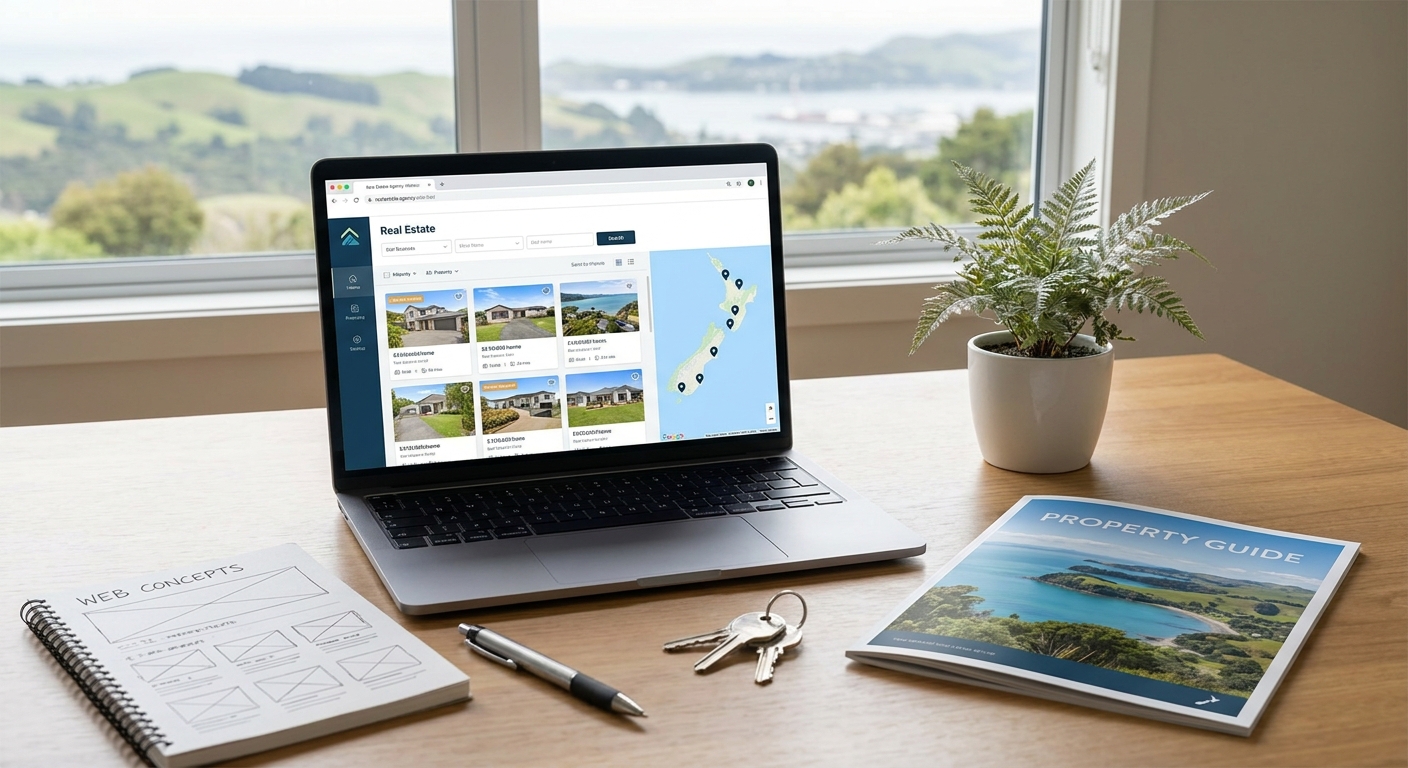
Kiwi house-hunters do almost all their browsing on a phone now, and if your listings page takes more than a few seconds to load, they're back on Trade Me before your site even finishes rendering.
- Web design for real estate agents nz needs Trade Me Property and realestate.co.nz feed sync, not a generic template — Skip anything that can't pull live listings.
- Mobile-first builds win in 2026 because most vendors and buyers browse listings on a phone during an open home.
- REAA 2008 disclosure requirements should be built into the site structure, not bolted on as a footer link.
- No Brainer Creative builds NZ agent sites around lead capture and listings speed rather than stock templates — Buy this approach over a generic real estate theme.
Why this matters
A real estate website isn't a brochure — it's a lead-generation machine that has to work at 7pm on a Sunday when someone's scrolling listings from their couch. Get the build wrong and you're paying for photography, signage and MREINZ membership while your website quietly loses the vendor enquiries that should be landing in your inbox.
No Brainer Creative builds web design for real estate agents nz around three things that actually move enquiries: load speed, mobile usability and trust signals that reassure a vendor before they've even called you. Everything else is decoration.
Who this is for
This guide is for solo agents building a personal brand, small boutique agencies wanting to look bigger than they are, and franchise-affiliated agents who need a site that still feels like their own patch. If you're spending your marketing budget on signage and Trade Me listing upgrades but your own website is an afterthought, this is written for you.
What to look for in web design for real estate agents nz
Fast-loading listings pages
Google's Core Web Vitals flag any page with a Largest Contentful Paint over 2.5 seconds, and a listings gallery loaded with unoptimised photos blows past that easily. Slow listings pages cost you enquiries before a vendor even reads your bio, and in 2026 Google's mobile-first indexing punishes slow pages in search rankings too.
Mobile-first browsing experience
Most house-hunters check listings on their phone during an open home or straight after seeing a sign. A site designed desktop-first and shrunk down for mobile means fiddly photo galleries and forms that are painful to fill out with a thumb — exactly when a lead is warmest.
Integration with Trade Me Property and realestate.co.nz
Your own site should pull listings automatically from the same feeds you're already paying to list on. Manual re-entry means stale listings, wrong prices, and sold properties still showing as available weeks later.
Compliance with REAA 2008
The Real Estate Agents Act 2008 sets disclosure rules for agent identification and conduct. A site built without this in mind means retrofitting compliance pages later, which is more expensive than building them in from day one.
Trust signals that convert a browsing vendor
A vendor deciding who lists their house wants to see a real face, real reviews, and a clear track record before they pick up the phone. Stock photography and generic bios don't do that job.
Lead capture tied to your CRM
A contact form that dumps into an inbox nobody checks is worse than no form at all. Forms should route straight into whatever CRM or spreadsheet you're actually using to follow up.
Top picks: which build fits your business
The lone wolf pick: solo agent personal-brand site
Built around one agent's name, face and listings, with a clean bio page as the homepage anchor. One clear metric matters here: a single, obvious call-to-action above the fold, because a solo agent site with three competing buttons confuses a warm lead. Verdict: Buy — this is the right build for an independent agent without a big team to showcase.
The credibility play: small boutique agency site
Designed to make a 3-4 person team look established, with individual agent pages feeding into one shared listings engine. The number that matters: every listing should sync from Trade Me Property within minutes, not hours, so nothing looks stale. Verdict: Buy for agencies wanting to look bigger without pretending to be a franchise.
The compliance-first pick: franchise-branded microsite
Built inside a franchise's brand guidelines but still needs its own lead-capture logic and REAA-compliant disclosure pages. One spec matters most: your microsite needs its own analytics separate from the franchise national site, so you can actually see what your own marketing is doing. Verdict: Consider — only worth the extra build cost if the franchise gives you enough creative room to differentiate.
The wildcard: luxury listings showcase site
Heavy on photography and video, light on clutter, built for agents working six and seven-figure listings where the property itself is the pitch. The number that matters: hero images need to load under 2 seconds even at full resolution, or the luxury feel falls apart before the first scroll. Verdict: Consider — powerful for the right niche, overkill for a general residential book.
The numbers pick: mobile-first lead-gen site
Stripped back, fast, built around one job: capturing enquiries from someone scrolling listings on their phone between open homes. Verdict: Buy if enquiry volume matters more to you than brand polish, which it usually does for agents building a client base from scratch.
What to avoid
- Generic real estate WordPress themes with a listings widget that isn't actually synced to Trade Me Property — you'll be manually updating two systems forever.
- US-style MLS/IDX plugins bolted onto an NZ site. There's no MLS here, and these plugins usually break or display nothing once installed.
- Autoplay hero video backgrounds on the homepage. They look great on a laptop and murder load speed on the 4G connection someone's using while standing in your open home car park.
Verdict comparison
| Build type | Best for | Load speed priority | Verdict |
|---|---|---|---|
| Solo agent personal-brand | Independent agents | High | Buy |
| Boutique agency site | Small teams (3-4 agents) | High | Buy |
| Franchise microsite | Franchise-affiliated agents | Medium | Consider |
| Luxury showcase site | High-end listings niche | Very high | Consider |
| Mobile-first lead-gen | Volume-focused agents | Very high | Buy |
Talk to No Brainer about your site
Get a build that syncs listings and captures leads properly.
FAQ
What's the best web design for real estate agents in NZ in 2026?
The best approach syncs live listings from Trade Me Property and realestate.co.nz, loads fast on mobile, and puts a lead capture form above the fold. A generic real estate theme without live feed integration falls short of this in 2026.
Do real estate agents in NZ need their own website if they're already on Trade Me?
Yes — Trade Me Property is a listings platform, not a personal brand. Your own site is where a vendor checks your track record before calling, and it's the only place your enquiries route directly to you instead of a shared platform inbox.
How fast should a real estate agent's website load?
Aim for a Largest Contentful Paint under 2.5 seconds, which is Google's Core Web Vitals threshold in 2026. Listings pages with heavy unoptimised photos are the most common cause of slow load times for agent sites.
Is a mobile-first design more important than desktop for real estate sites?
Yes, because most house-hunters browse listings on a phone during or right after an open home. A desktop-first site that's simply shrunk down for mobile usually has fiddly forms and galleries at exactly the moment a lead is warmest.
Does a real estate website need to comply with the REAA 2008?
Yes — the Real Estate Agents Act 2008 sets disclosure requirements that should be built into your site structure from the start. Retrofitting compliance pages later costs more than designing them in during the initial build.
What's the biggest mistake NZ real estate agents make with their website?
Using a generic template with a listings widget that isn't actually synced to Trade Me Property. It means manually updating two systems and vendors seeing stale or sold listings still marked as available.
Should a franchise-affiliated agent have their own website separate from the franchise site?
Yes, a franchise microsite with its own analytics and lead capture lets you actually measure what your own marketing is doing. Relying solely on the national franchise site buries your individual results in shared data.
How much does web design for a real estate agent cost in NZ?
Costs vary depending on whether you need a solo personal-brand site, a multi-agent boutique build, or a luxury showcase site with heavy photography. Get a tailored quote based on your listing volume and feed integration needs rather than comparing flat rate cards.
One last thing
The agents who get the most out of their website in 2026 aren't the ones with the flashiest design — they're the ones whose site answers a vendor's first question ("has this agent sold anything like my place?") within the first scroll. Build for that question before you build for anything else.
Whichever build fits your business, the site only pays off once listings sync automatically and every form actually reaches you. No Brainer Creative builds web design for real estate agents nz around exactly that.